Scholarly Analysis
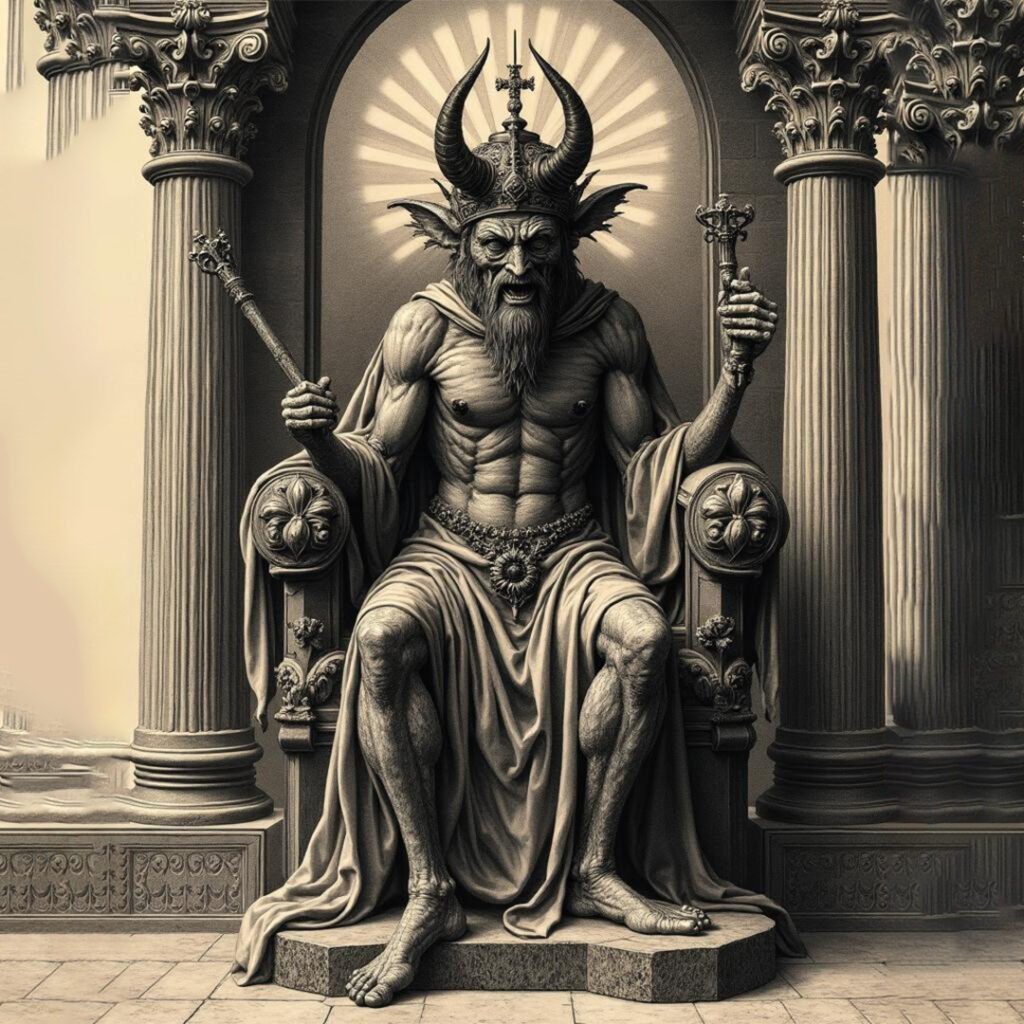
This early sixteenth-century engraving represents the culmination of late medieval demonic hierarchography. Astaroth, identified in grimoire tradition as a great duke of Hell, receives appropriately noble treatment: throne, crown, and scepter assert status within infernal bureaucracy.
The Renaissance influence is evident in proportional relationships and architectural framing. Classical columns support the demonic throne, suggesting continuity between pagan and demonic realms that contemporary demonologists debated extensively.
Anatomical distortions follow systematic logic rather than arbitrary monstrosity. The reversed joints, the extra limbs, the hybrid features each carry specific meanings within the elaborate symbolic system of Renaissance demonology.